


OVERVIEW
Staffing growth is flat in 2026 and gross margins aren't coming back, says Tom Kosnik, President of Visus Group. Recorded live at ASA Staffing World in Denver, this episode of The Growth Game covers what Tom is telling staffing owners right now: know your true cost of sales, sell consultatively, and redesign workflows and comp plans before expecting AI to pay off.
Key takeaways
- Growth is narrow. Citing the St. Louis Fed, Tom Kosnik puts staffing industry growth at about 2% in 2026, mostly from construction and light industrial. He says most other sectors are flat.
- Margins won't recover. Tom names two structural forces behind margin compression: wage inflation, and buyers who now decide the spread they will pay.
- Know your true cost of sales. Costs like drug tests and background checks often sit below the gross-margin line, hiding a staffing firm's real margin from its owner.
- AI pays off only when the work is redesigned. Tom says the firms that redesign workflows, job profiles, metrics and comp plans have seen recruiters produce three times the gross profit.
- Consolidation is happening quietly. In “over-the-fence” deals, staffing owners sell to peers they've known for decades instead of going to market.
Chapters
Click to jump
- 00:00 Introduction & Welcome | Denver ASA Staffing World 2026
- 04:16 State of the Staffing Industry in 2026
- 05:34 Financial Pressure Hitting Staffing Firms Right Now
- 06:23 Over the Fence M&A: Informal Consolidation Is Growing
- 07:24 Are Staffing Gross Margins Ever Coming Back?
- 10:01 How Buyers Are Now Dictating Staffing Margins
- 10:58 The Coca-Cola Bottling Effect on Staffing Pricing
- 11:52 Re-Engineering Operations to Survive Margin Compression
- 13:03 Pricing Strategy: Knowing Your True Cost of Sales
- 15:32 AI Implementation in Staffing: What’s Actually Working
- 17:01 Why Most Staffing Firms See No ROI From AI Spend
- 22:28 What On-Demand Staffing Platforms Taught the Industry
- 23:45 Offshore Teams and Business Process Outsourcing
- 26:25 Final Thoughts and Closing
THE SCOOP
04:16
Is the staffing industry growing in 2026?
Barely. Tom Kosnik cites St. Louis Fed figures showing the staffing industry up about 2% this year, driven mainly by construction, where data center projects are a factor, and light industrial. “The rest of the staffing industry is flat,” he says. His own consulting reflects it: assignments are coming in, but they take much longer to close because independently owned firms are under pressure from rising costs, including double-digit healthcare increases, job board spend and travel.
06:23
What is “over-the-fence” M&A in staffing?
It's informal consolidation. Rather than taking the business to market, a small staffing owner approaches a peer they've known and trusted for years and asks whether they'll buy it. Tom, who has been in the staffing industry for just over 30 years, expects more of these deals as owners he has known for 20 or 30 years reach that stage.
07:24
Are staffing gross margins coming back?
No, and Tom gives two foundational reasons. The first is wage inflation. Wages stayed largely flat from 2010 to 2020, then rose sharply, so light industrial jobs that paid $12 an hour now pay $22, and some manufacturers decide they can hire directly at that rate. The second is that buyers are far more sophisticated about labor costs. A client will accept a higher pay rate but cap the spread, telling a firm it won't pay more than $4 an hour over pay.
10:01
Why are buyers now dictating staffing prices?
Outsourcing further up the chain. Tom's example is Coca-Cola, which he describes as selling its bottling plants to third parties that operate on tight margins. The buyer of labor is now that bottler, not Coca-Cola, and it tells staffing firms what it can pay, which leaves far less margin than before. One CFO of a $350 million staffing firm in Tom's CFO roundtable summed up the shift by asking when clients started telling staffing firms what they would charge.
13:03
How should a staffing firm build its pricing strategy?
Start with what actually belongs in cost of sales. Drug tests and background checks often get booked below the gross-margin line on the P&L, so owners never see their true margin. Then take that data to the buyer's purchasing team or CFO as part of a consultative sale, rather than a transactional one. On the cost side, Tom points to business process automation, business process outsourcing, and nearshore or offshore teams.
“Your competition is not the big nationals. Big nationals know what they're doing. Your competition is the other independent that does not have a pricing strategy.” — Tom Kosnik, 13:47
15:32
Why aren't staffing firms seeing ROI from AI?
Tom says most independently owned staffing firms are well behind on AI at the process level, even when individual recruiters use it. A firm buys an AI recruiting tool, changes nothing else, and gross profit production per recruiter stays flat. The firms getting results redesign workflows and job profiles across sales, recruiting and the back office, then change metrics and comp plans to reward the new work. Some of those clients have seen recruiters produce three times the gross profit. His biggest success stories are in IT and engineering staffing.
“If that technology is not increasing gross profit production per internal resource, you're taking money right out of your bottom line.” — Tom Kosnik
24:06
What does a Scotch distillery have to do with staffing?
On a hike along Scotland's West Highland Way, Tom learned that new Scotch distillers often start with vodka, which reaches the market in months, and use those sales to fund the Scotch, which takes far longer. Asked what a staffing firm's vodka is, Tom points to consultative selling over transactional selling. Paul's version for startups: don't chase big volume at low margin before your processes are ready. Bring real value to the buyer, earn a little extra margin, and reinvest it.
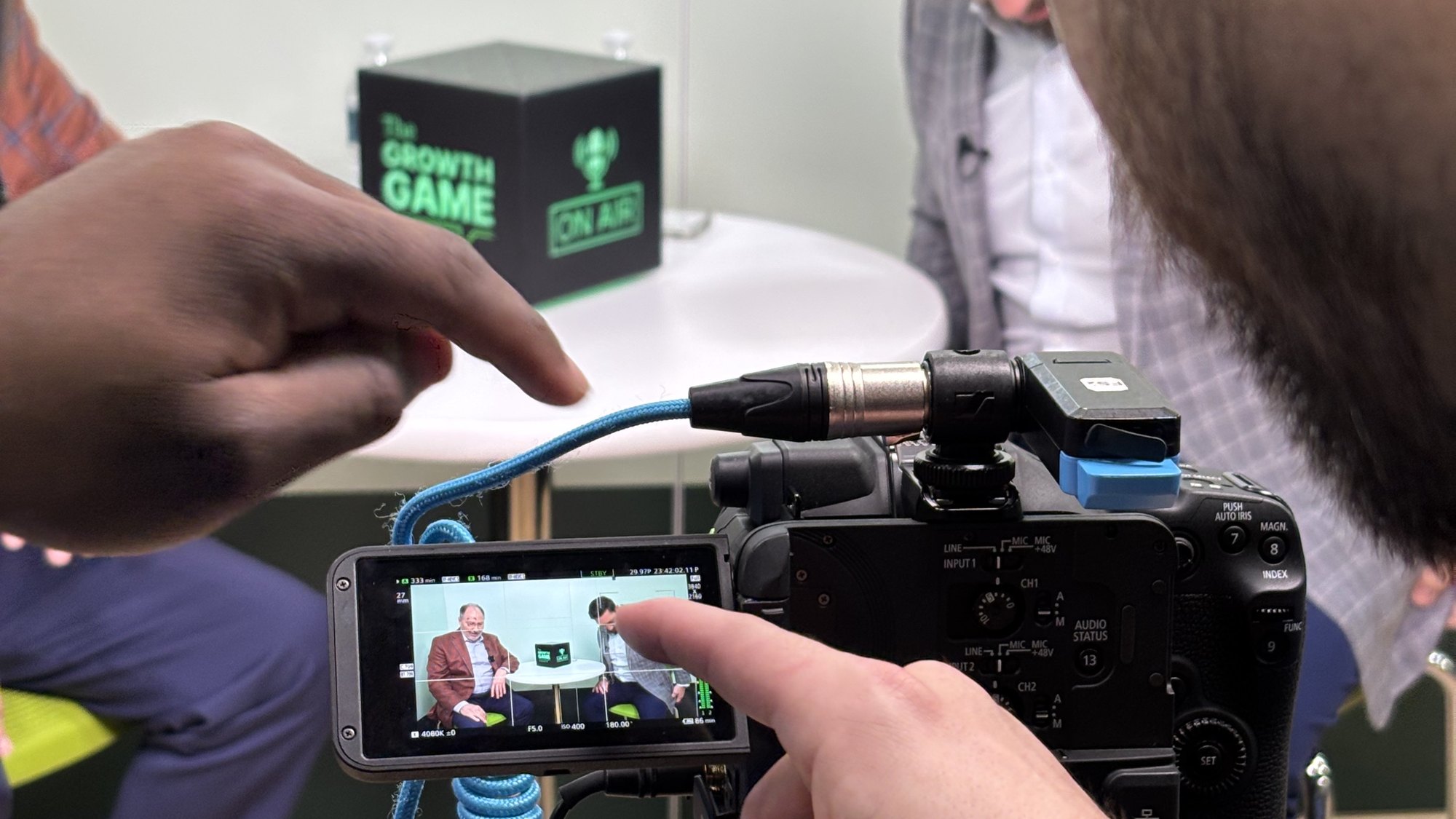
Full transcript
Lightly edited for names and terms.
00:00 · Introduction & Welcome | Denver ASA Staffing World 2026
Paul 00:06 Welcome to Denver ASA Staffing World. And welcome to another show of the Growth Game podcast. I'm your host, Paul DeLuca. It's great to be back with everyone. Uh, here we are in 2026. And we get to start out with a repeat. And one of our dear friends, Tom Kosnik from Visus Group. Tom, thanks so much for being back with with us on the show.
Tom 00:30 I'm very glad to be here, Paul, and excited about what we're going to be talking about here in the next few minutes.
Paul 00:35 Absolutely. Well, great. Well, thank you for taking time. And I know an extremely busy conference environment to sit down with us and have another conversation.
Tom 00:43 Yes. Yeah, it's.
Paul 00:44 Been.
Tom 00:44 Good.
Paul 00:44 Our, um, our last episode was one of the most trending that we had all years. So yeah, we're looking for a repeat.
Tom 00:52 Yeah, I so am I.
Paul 00:53 Okay, good. Excellent. Well, Tom, so tell us something. What's been going on? Tell us something personal. What have you done this last year? That was interesting.
Tom 01:00 Fun. You know, my my, my wife and I. We had a couple of trips to Europe that, uh, got canceled because of the conflict and Iran and the price of of everything. And, uh, anyway, long story short, uh, we were trying to figure out what we were going to do this summer. And so, uh, you know, my oldest, I think I shared with you, my oldest is, uh, down syndrome and autistic.
Got it. And so we're like, well, let's do a long weekend with Andrew. And so, Andrew, what do you want to do? I want to go to a waterpark, dad. I said, okay, so we find a waterpark to go to. Okay. And oh like we had so much fun. Well, like, he is he he's such a great person to travel with. He's an easy traveler. He sleeps through the night.
He doesn't snore. Just. And it doesn't matter where you go to eat. He's just so glad to be there. He'll. He'll walk into a restaurant. Walks in. Hi, guys. I'm here.
Paul 01:54 Like people wonder where we got that personality from.
Tom 01:57 Oh,
my wife's side. Okay, okay. But, uh. Yeah. No. So, uh, so we had, uh, unfortunately, and, and, uh, you know, as I shared, we, we have a house down on the Ohio River, which is just a beautiful condo in the city in Chicago. Okay. House in Kentucky on the Ohio River. So it's the best of both worlds. It's, uh, when Chicago stresses me out, I go down there for a couple of weeks, and, uh, and when I.
And when the when the birds and the and the, uh, raccoons are driving me crazy in Kentucky, I come back up to Chicago.
Paul 02:28 All right. That's funny. That's great. How old is your son?
Tom 02:31 He's 31. Nice. Yeah.
Paul 02:33 31 and independent. You said.
Tom 02:35 He's. Yeah. He's living, uh, he's living in a in up in Skokie, Illinois. He's got three roommates. Uh, the house is supported, and, uh, he's living his best life. He's, uh, he's he's in a couple of different day programs. He has, uh, he he's he's a painter. I could show you some of the paintings that he's done, and, uh, my daughter.
So I've got two other kids, and all kids are blessing, obviously. But, uh, my daughter's like, dad, I want to like, after you retire, I want to create a business where we can sell Andrew's art.
Paul 03:05 That's cool, I love it.
Tom 03:06 So I said, okay, well, let me get to next. Let me get through this phase and then we'll look at that. So yeah. No.
Paul 03:14 Sounds like you had a nice summer then he's a.
Tom 03:16 Yeah. Oh yes. Yeah yeah yeah. It's we had a spectacular summer in Chicago. Uh, you know, I live a half a mile south of Wrigley Field. Yeah. And, uh, so I buy a package. Sure. We. I split it with a friend of mine. 20 games. I get ten games this year. The Cubs won every game I went to. I mean, I'm happy to say I was the lucky charm.
Paul 03:36 Yeah, you were the charm.
Tom 03:37 Every game that. That is something that is so rare. Oh, yeah. Yeah, yeah. And, uh, and then the White Sox, my gosh, make getting into the playoffs from like where they were last year to wow. Oh my gosh. So yeah we had a great solid.
Paul 03:52 Good hometown uh hometown sports fan I love it. Oh yes. Good for you.
Tom 03:55 Yeah.
Paul 03:56 Well great. How is things going in business? I'd love to understand, you know, how are you facing all these crazy? You know, I mean, there's so much change going on as doing what you do. You see the insight. You're you're consulting and advising all these staffing agencies who are dealing with change. And I'm sure that creates change for you.
Like, how's business going?
04:16 · State of the Staffing Industry in 2026
Tom 04:16 Yeah, business is, uh, you know, the industry overall. And, you know, I track all this stuff. I read a lot, uh, economics and this sort of thing. But, uh, the St. Louis Fed are telling us that the staffing industry is up 2% this year, so that 2% is predominantly construction and light industrial. Light industrial, because we had have a lot of immigrants that have self-selected out of the country construction.
The data centers are driving that, but the rest of the staffing industry is flat. Yeah, and that's like every other sector that you can talk about is flat. So a lot of our clients, Paul, uh, they're struggling to try to like, where can we get the growth? And so we're seeing like my business. We you know, we've got we have the peer roundtable program.
So we've lost a number of members more than we'd like since the first of the year. We're picking up new members. So you got to keep that train moving. And our consulting, we're picking up consulting assignments, good solid consulting assignments, but they're just taking a lot longer to close. And I really think that that, that that is a reflection of the fact that the industry people and most of our clients are, are independently owned, but they're under a lot of pressure.
05:34 · Financial Pressure Hitting Staffing Firms Right Now
Paul 05:34 A lot of financial pressure.
Tom 05:36 You know, margin pressure, internal. I look, you guys, what healthcare expense like the double digit increase over last year. Uh, what's LinkedIn doing. What are the job boards doing. Yeah. What are the just the general G&A like we've had we had a number of we I have a number of clients that that that put a freeze on travel.
Because of the cost of travel with the gas prices has skyrocketed. So our our. Like your clients. My clients. They're it's they're trying it's
it's a flat year for most of them. And they're just trying to figure out how do I get the growth back. Yeah. And and then on the back side of that we're starting to see like these over the fence M&A deals.
06:23 · Over the Fence M&A: Informal Consolidation Is Growing
Paul 06:23 What do you mean by over the fence.
Tom 06:24 Well like a small staffing business. Yeah. Uh oh geez. John owns his staff. He's I know I've known him for years. Uh, he's an ethical player. I like him, I'm going to meet with him and see if he'll buy my business.
Paul 06:38 Oh, I see what you said. A lot of consolidation. Yeah, a lot of not for sale consolidation. Correct. Yes. Got it. Okay.
Tom 06:43 Got it. And, uh, so we're going to see a lot more of that. Yeah. Because I've been in the industry for just over 30 years. And a lot of the folks that I know I've known for 20, 30 years, you know, and they're now of the age where they're like.
Paul 06:59 Yeah, it's time to take my chips off the table, consolidate. Things have been tough. It's a lot harder to get the M&A market to do something actually, actually, you know, structured you have to be really so much larger. So the smaller ones almost kind of need somebody to be able to join with merge with. That's interesting.
But let's talk about we know growth is a challenge. Let's talk about gross profit margin. Yeah. Is it ever coming back.
07:24 · Are Staffing Gross Margins Ever Coming Back?
Tom 07:24 Oh it's it's not it's not going to come back. And I'm going to say two things. Number one wage inflation is the is really the killer. So corporate America kept wages flat after the Great Recession. So from 2010 to 2020 wages across the board were kept flat. And so corporations use temp labor contract labor to help keep wages flat.
And you remember, I mean, people were saying, hey, the only way you can get a raise is by making a job change, Even if it was a lateral change, I could get a 10% bump in my my salary. Back in the back in the early 2000. Well, like then we got this serious wage inflation that has gone on. And so now clients are kind of like well, on the light industrial side, the lower end jobs that were $12 an hour jobs are $22 dollar an hour jobs.
And these manufacturers are saying, hey, well, why don't I? Well, at that rate, we can just hire these people on our own. Right. And and then the other thing that's happening is that the buyers are so much more astute on labor costs and the personnel of a staffing company. So they'll go and say, hey, look, okay, you've been making, uh, you've been making $4 an hour spreads, you know, on these guys, I understand, but and we're going to increase the pay rate at X, but we're not going to pay more than $4 an hour spreads on these guys.
Paul 08:50 And they're just demanding that they're just like, this is it. This is the only spread we're going to take.
Tom 08:55 I my CFO roundtable. You would. You would love my CFO roundtable. But anyway, uh, we met three, three weeks ago, and one of the one of the CFOs, big company, uh, 350 million in revenue. It said, like, when did when did the clients start telling us.
Paul 09:12 You told me about this.
Tom 09:13 And start telling us, like what? Like what? We're going to charge them for our services. Yeah, like like when did that happen?
Paul 09:19 I think that was actually a Coca-Cola plant, right?
Tom 09:22 Yeah. Well, that's a whole nother that's a whole nother issue on margins. Yeah. Because what's happened in that example. So first thing, wage inflation second thing.
Paul 09:31 So bottom line across the board clients are keeping the the the margins down even though the wage inflation is coming up. They're basically saying you got to hold your rate. So what's what's eating. The gross margin creep is actually the cost of labor increasing without ability to pass it on to the clients.
And the clients are getting educated and they're just saying, no, that's it. The competition's there. This is and that's why Basically what you're saying is deal with it. Deal with it. Gross margins aren't coming back.
10:01 · How Buyers Are Now Dictating Staffing Margins
Tom 10:01 They're not coming back. And then and then the other the other dynamic that's happening in business overall in the United States. And you and I talked briefly about the Coca-Cola, where Coca-Cola is in the process of selling off all their bottling plants, and they are to third parties. So they get they get all that stuff off their balance sheet.
Got it. They go to a third party. Hey, all you do is bottling. You take over our bottling. But this is what we're going to pay you. Well look the. So they're under tight margins right from Coke. And so then what? So now the the buyer of labor is not coke. The buyer of labor is that is that bottling plant that that that that that third tier party bottling plant.
And so then they go to the staffing firms and say, hey, like we need labor, but this is all we can pay. Yeah. And it's a lot less margin than what they were getting directly from telling them.
10:58 · The Coca-Cola Bottling Effect on Staffing Pricing
Paul 10:59 Exactly. Don't show up on the. Don't show up unless it's under this. So they're really guiding the pricing.
Tom 11:04 Paul. Our industry, the staffing. Like we could really talk about a lot of dynamics that are happening in the industry. But our industry really like these margins are not coming back. Got it. And those are two key significant economic foundational reasons why the margins are not coming back.
Paul 11:24 Yeah I get it.
Tom 11:25 And so and so then.
Paul 11:26 So you're basically saying to your clients you either you either survive and deal with this by re-engineering your business process to be able to deal with these gross margins or, or it's just not going to work.
Tom 11:38 Let's look let's you and I just look at the personnel of a staffing company. Right. And this is this is where business process automation, business process outsourcing, nearshore offshore, uh, this is where, um.
11:52 · Re-Engineering Operations to Survive Margin Compression
Paul 11:52 Bringing the cost out of the equation is it must.
Tom 11:56 Be a pricing strategy. Getting a lot smarter with pricing strategy. Like also all all of those dynamics that you own a staffing business and you want to make a you want to drop a certain percentage of that gross profit to the bottom line. Like, you got to be thinking about all these things.
Paul 12:13 It all adds up.
Tom 12:14 And, and and you you really have to have different kinds of conversations with your clients, right? Right. It's it's otherwise I mean, a lot of the industry has become commoditized.
Paul 12:28 Yeah, it really has. I'd love to hear a couple of you talked about pricing strategy. I'd love to hear maybe just 2 or 3 takeaways, like if, if you're if you're a CEO and a, you know, 2 to $100 million shop and you know this. Yeah, you know this, but how do you actually execute on what are the kind of the top 2 or 3 things that you should say to yourself?
I have to think about this so that I can execute on something that's actually standardized when it comes to pricing.
Tom 12:55 Anybody listening to this podcast? Yeah. This is this is and as many panels that I've looked at as many panels that you have looked at.
13:03 · Pricing Strategy: Knowing Your True Cost of Sales
Paul 13:03 Yeah.
Tom 13:03 Drug tests, background tests. Where do they put them on a P&L.
Paul 13:07 Yeah, lots of times they put them down below.
Tom 13:09 Right in the air.
Paul 13:11 And then nobody actually knows that it's actually a cost of sale and it's hitting the margin.
Tom 13:15 You're right.
Paul 13:16 Associated with sometimes the pay no bills, sometimes they don't even put the. Yeah. So they're not actually putting it up to know what their real true margin is.
Tom 13:24 And then having those kinds and then having those kinds of customers taking that data, having those kinds of conversations with either the purchasing or the CFO of your buyer, right? To say, guys like, we're in this together, right? Right. Uh, we our fulfillment team is X. We've got this kind of technology that's driving.
Paul 13:47 Right?
Tom 13:47 Right. Yes, yes. But but look. But first off, pricing strategy, like are you including those? Are you analyzing those costs? In your pricing strategy? I like. This morning I had a conversation with a gentleman that's got a nice business. And I at some point, you know, I said to him, hey, like your your competition is not the big nationals.
Yeah. Big nationals know what they're doing. Yeah. I said your competition is the other independent that does not have a pricing strategy that doesn't know what they're doing. Right. That's bidding this work at 1.20 or 1.21. And and then you kind of like this race to the bottom kind of thing. So like a number one.
Yeah. Like you really have to like you have to know what goes in the cost of sales. Yeah.
Paul 14:37 And and share that data with the buyer client.
Tom 14:39 Yeah. It becomes part of the whole selling process.
Paul 14:43 I love.
Tom 14:43 That which is which which the consultative selling process is going to is a framework in which you're going to force those kinds of meetings with the buyer where the transactional.
Paul 14:57 Selling methodology just doesn't work. I think that's a great that doesn't do it. That's a great takeaway. You talked about productivity gains that are an absolute must if client if if staffing agencies want to survive because the margins aren't coming back. They are what they are. You have to deal with it.
Ring out your costs, get productivity gains. How are people in our industry dealing with productivity gains or not when they look at AI? You know, I mean, we know that there's a certain amount of AI hype, but at the same time, there is implementations that are working, what's actually happening in our industry the good, the bad, the ugly with AI.
15:32 · AI Implementation in Staffing: What’s Actually Working
Tom 15:32 I'm so glad you're asking me these questions because, like, we've got so many, uh, in our round tables, we've got so many staffing companies of all niches, all sizes. We've got firms that are north of a billion. We got firms as small as, you know, 10 million in our roundtable program. Uh, but the whole thing with AI is that the staffing industry as a whole is way behind.
In terms of implementing successfully implementing AI, right? A recruiter a salesperson may be doing this or that with AI, but in terms of processes like we're way behind most staffing, independently owned staffing businesses are way behind on implementing AI. First off, so having some kind of an AI policy policy, having some kind of an AI strategy, I mean, it's critical, which has got to be aligned with sales process, fulfillment process, back office process.
Those are the big three in our industry. Now here's the other thing. Uh, I've got clients that will go and they'll get the AI recruiter. That's kind of where the big that's where it's all happening right now. Uh, less so on the sales side. But I'll ask the question. Oh, okay. So you're paying X for this AI recruiter.
So your internal recruiting resource producer, have you been able to increase the gross profit production with that research. Per.
Paul 16:53 Per. Recruiter. Yeah. Zero flat. Even with all the. All the spend like. And you're talking like. Across your clients.
17:01 · Why Most Staffing Firms See No ROI From AI Spend
Tom 17:01 Most of my clients. Most of my. I'd like to say 90% of my clients. Now they are getting benefit out of that. Well, we're slowly figuring it out, Tom. And but here's what here's what happens is that from an organizational development perspective. And again, this is this is a key thing that anybody listening to us in this podcast look, you've got you have to redesign the processes.
So my clients that are successful with implementing AI both on the on the on the recruiting, the sales in the back office, they redesign the workflows, they redesign the job profiles for salespeople, recruiters, back office folks, and then they put metrics and they change their comp plans to reward the new job tasks and the new job profile.
Right? Because otherwise what's going to happen? Oh, gosh. You know, Paul bought me a new AI tool, you know. Yeah, that's exactly what happens.
Paul 17:58 Yeah, the implementation is the people actually using it and measuring it. You got to measure it.
Tom 18:02 No, it's. Yeah.
Paul 18:02 Right, right, right.
Tom 18:04 No. In the end.
Paul 18:05 Look, you're.
Tom 18:05 Done in the end, if that technology is not increasing gross profit production per internal resource, you're taking money right out of your bottom line. Yeah.
Paul 18:13 What do you what do you think? You know, it does seem like that's really that kind of, you know, top of funnel on the recruiting side is where, where you would think there should be the, you know, ability to affect it. But you're saying so many are getting almost no real productivity gains. But like if you look, if you if you if somebody has actually redesigned that process and has done it well, where do you see the little glimmer of hope?
Like, do you think that a recruiter can be twice as productive?
Tom 18:40 Three times.
Paul 18:41 Three times.
Tom 18:42 I've got clients.
Paul 18:42 Okay. So you do have some that have succeeded. Three X.
Tom 18:46 But and look these are, these are these are
astute business owners. Yeah. I mean, they know the the staffing industry. Yeah, but they they know technology. Uh, you know, they hire people from the outside. They help them do this org development, org change and org mapping and all that stuff. But yes. No, I've got clients that have gotten three times.
Paul 19:08 On the recruiter, on the, on the on the recruiter side. Yes.
Tom 19:12 Three times more gross profit, three times more headcount growth. All that. Yeah.
Paul 19:17 Crazy interesting. And are they doing that in ways that still still feels connected enough with the the recruiter and the candidate? Or are they doing things that maybe are shortcuts that long term?
Tom 19:29 Maybe it depends on the niche. It depends on the niche and it depends on the types of candidates that, um, you know, medical, uh, where it's where you it's a very human kind of nurturing job. Yeah. Uh, you know, there's more human touching and all that stuff. You get into the engineering and the IT guys and all that stuff, and it's it's, uh, a video interview.
They don't. I mean, to them. Yeah. Right. And and and, uh. And. I mean, you're probably aware of this now, but it's like the new the new, uh, virtual interview. You know, the the the the, uh, the interviewer says to the candidate, okay, I want you to stand up. I want you to wave your hand. I want you because now the AI has gotten so good on the candidate side that.
Paul 20:13 They almost can sit in for them.
Tom 20:15 Exactly.
Paul 20:16 Wow. It's absolutely.
Tom 20:17 Wild. It's crazy. What's going on right now?
Paul 20:19 Yeah.
Tom 20:19 And I'm sure you've heard where, uh, where candidates can embed, uh, language in their resume. That's not seen by you or me, but it's embedded in whatever. And it pushes them higher up on the food chain and all that. But it really that whole the human connection to the where does the virtual and the technology and where does the human uh.
It really depends on what niche, what jobs, you know, whether that body of, of candidates are more open to these virtual interviews and texting and all that stuff.
Paul 20:54 Where are you seeing the most adoption? Where they are least unfazed by the technology enhancements?
Tom 21:04 The the IT and the and the engineering.
Paul 21:06 So the really the the industry that already understands it and it's like this is what.
Tom 21:11 It that's my those are my those are my biggest success stories right there.
Paul 21:14 Interesting. Well I'd love to see how it develops. Continue to keep us in the loop to see how the AI.
Tom 21:20 You know, and look, uh, I know you've been in the industry long enough. You probably remember the on demand staffing platforms and like, oh, like the whole staffing model is going to change. And now it's like build a community. And oh, we're just going to send text messages and people are going to sign up for shifts.
And like, here we are, what, ten, 15 years later and we still can't get temps to download apps. We still can't. I mean, the adoption rate is just like, is it going to take a crisis? Like, what's it going to take? You know, for those you know, I think I think in the nursing, uh, the health care, there's a much higher success rate than with that, than the light industrial.
But like, like some of these business models, some of these new technologies, they never really fully. Yeah. Take off, take off. Yeah. Right. And so and that's another thing that look you can't if you, if you got to measure right like okay we've introduced this to let's measure on the back end. And if you're not getting the results that you need right then you got to like put it under the microscope and say, you know, hey.
22:28 · What On-Demand Staffing Platforms Taught the Industry
Paul 22:28 Is this going to work or not? Exactly. Well, great. Well, we've talked about AI and productivity. We've talked about the fact that gross profit margins are not going to come back. So we deal with it. Figure it out. Get the productivity in your business model. Redesign your processes I love that. Just accept it.
Accept the fact that the margins are coming back. And I completely agree with you. I completely agree with you. You know, people come to me and they're like, oh, I just don't even want to be in this business anymore at this margin. And and what I say to him is, well, look, what can you actually do to continue to create, you know, profit a profitable business here just because you don't have the margin you used to have you wring out these efficiencies.
You still have leverage on your margin. And and they're getting the money, you know, for me, for practically free nowadays. So I mean, the reality is they're still very profitable.
Tom 23:14 Businesses just.
Paul 23:15 Show up.
Tom 23:15 Just show them a P&L from from a firm in Europe.
Paul 23:18 Yeah, right. That's true. That's true. Right. Yeah.
Tom 23:22 Yeah, yeah, yeah. So but look, you can again, uh, you just you you can make the money that you want to make in this industry. Yeah. But again, it's like business process outsourcing, you know, using firms. And my little firm, we've got three people in the Philippines got it. And most my clients or our new prospects are kind of like so-and-so's out of the Philippines.
I mean they're shocked, you know. Right. And there's a there's a science to making that work as well. Yeah. You know.
23:45 · Offshore Teams and Business Process Outsourcing
Paul 23:45 But.
Tom 23:46 That right. Yes.
Paul 23:47 Well great. Well one last thing. So you told me one time that you gave me an analogy of what happens to a Scotch distiller. Yeah. And how did they become a Scotch distiller? And what did they do in their business plan when they're a startup? I'd love to hear that analogy. And then how that applies to my family.
Tom 24:06 Okay. So my two of my adult children, myself, we hiked the West Highland Way. Yeah. And and then. Oh my gosh. And anybody that's a hiker like put it on your list West Highland Way. And if you can do it with kids and all that stuff you have with all kids, it's an amazing hike. It's like, you can do it. You can do like, it's like 97 miles.
You can do it in seven, eight days. All that stuff. But along the way, there's like some distilleries that you could hit. Right. You're in Scotland. But. But I learned in Scotland. Well, uh, I walked into this little shop. All they sold was vodka, and, I mean, like, some great tasting vodka. Yeah. And I learned that the Scotch distillers that they.
When they open up a distillery, they start with vodka, because vodka is much closer to taking to the market. So they they manufacture it. Three months later, they're taking it to the market. They're making money. And then they use the proceeds from the vodka sales to fund the, the, the manufacturing of scotch, which takes a lot longer.
And as you know, and and off they go. Yeah. So it's a great, great business model.
Paul 25:13 So what is the staffing agency's vodka?
Tom 25:19 Yeah I would say a consultative selling their, their, their vodka. Is that transactional. I mean I know there's a lot of people that still think that transactional. Look, Paul. Uh, okay. So light industrial and construction is up, you know, whatever, whatever this year, right? Uh, and I say to my clients, guys, you've been buying this transactional sales training stuff for the last 4 or 5 years.
Your salespeople didn't magically wake up one morning and all of a sudden like, they're fantastic salespeople, right? So how do you how do you, uh. Um, commoditized yourself. Right? Right. Adopt a adopt a consultative selling methodology. Yeah. And that's.
Paul 26:04 And that if you're a startup, don't get out there and try to just take on the world and try to take big volumes with low margin, because you don't have your business process yet. Do something that's actually giving value to the buyer on a consultative approach. You take you a little bit of extra margin, then you can reinvest that in your business.
Tom 26:21 You'll be a breath of fresh air, too.
Paul 26:23 Yeah, I like that. I like that that's a that's great advice.
26:25 · Final Thoughts and Closing
Tom 26:25 We have to in our industry. We have to learn a whole new language. Yeah. Because that's where the industry is going.
Paul 26:31 That's great. That's great advice. Well, Tom, as always, it's great to have you on the show. Thank you so much. I really appreciate it.
Tom 26:37 Thank you. Pleasure.
Paul 26:38 Well, that's a wrap for another episode of the Growth Game podcast here in Denver at ASA Staffing World. Until next time.
In this conversation


Tom Kosnik
Tom has been in the staffing industry for just over 30 years. Through Visus Group he runs peer roundtable programs, including a CFO roundtable, and consults with staffing firms ranging from around $10 million to more than $1 billion in revenue. This is his third appearance on The Growth Game.


Paul DeLuca
Paul founded Meritus Capital and has worked with more than 800 staffing companies over the course of his career. He specializes in helping staffing owners through mergers, acquisitions and periods of rapid growth, and brings that experience to every conversation on The Growth Game.
Running a staffing firm through a flat year?
Meritus Capital has funded staffing companies for more than 20 years. If payroll timing is part of the margin squeeze, we're happy to talk it through.